Anna Schmidt · 12 September 2026
Reconstructing User Engagement Pathways After Major Platform Transitions in Niche SaaS Operations
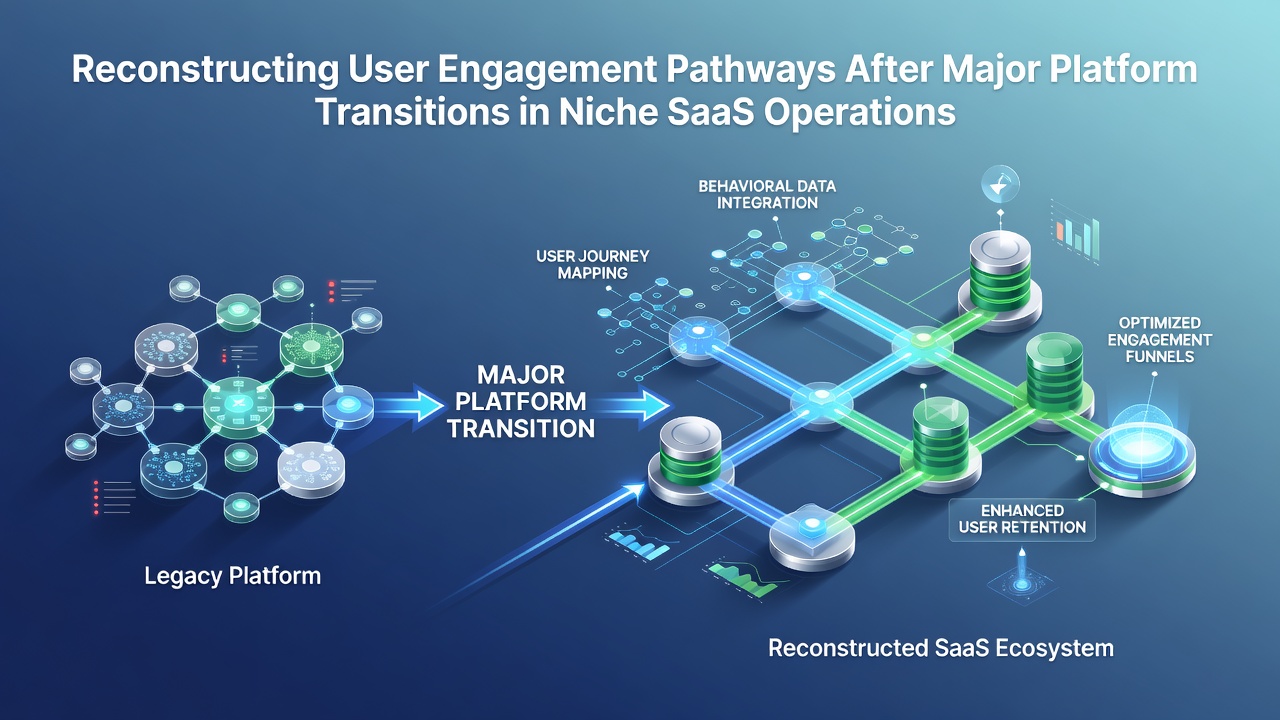
Platform transitions in niche SaaS environments often involve complete overhauls of backend architectures, user interfaces, and data handling protocols, which directly reshape how customers interact with core features. Organizations that manage specialized tools for sectors such as legal document automation or healthcare compliance tracking must rebuild engagement sequences from the ground up after these shifts occur. Data from multiple industry analyses shows that retention rates can drop by 25 to 40 percent in the first quarter following an unoptimized migration unless targeted reconstruction efforts begin immediately.
Defining Platform Transitions in Specialized SaaS Contexts
Niche SaaS providers frequently encounter transitions triggered by regulatory updates, scaling requirements, or infrastructure modernization, and these changes force teams to reassess every touchpoint along the customer journey. When a project management platform serving construction firms switches from a monolithic database to a microservices model, for instance, login flows, notification systems, and reporting dashboards all require recalibration. Observers note that such modifications alter behavioral patterns because users lose familiar shortcuts while new pathways introduce additional steps or entirely different interaction models.
Studies compiled ahead of September 2026 project that approximately 65 percent of vertical-specific SaaS vendors will complete at least one major transition within the next 18 months, driven largely by cloud provider consolidations and compliance mandates. Australian Bureau of Statistics figures on digital service adoption reveal that firms in the professional services category experienced a 31 percent increase in platform change events between 2023 and 2025, with corresponding adjustments needed in user onboarding sequences.
Mapping Pre- and Post-Transition User Behaviors
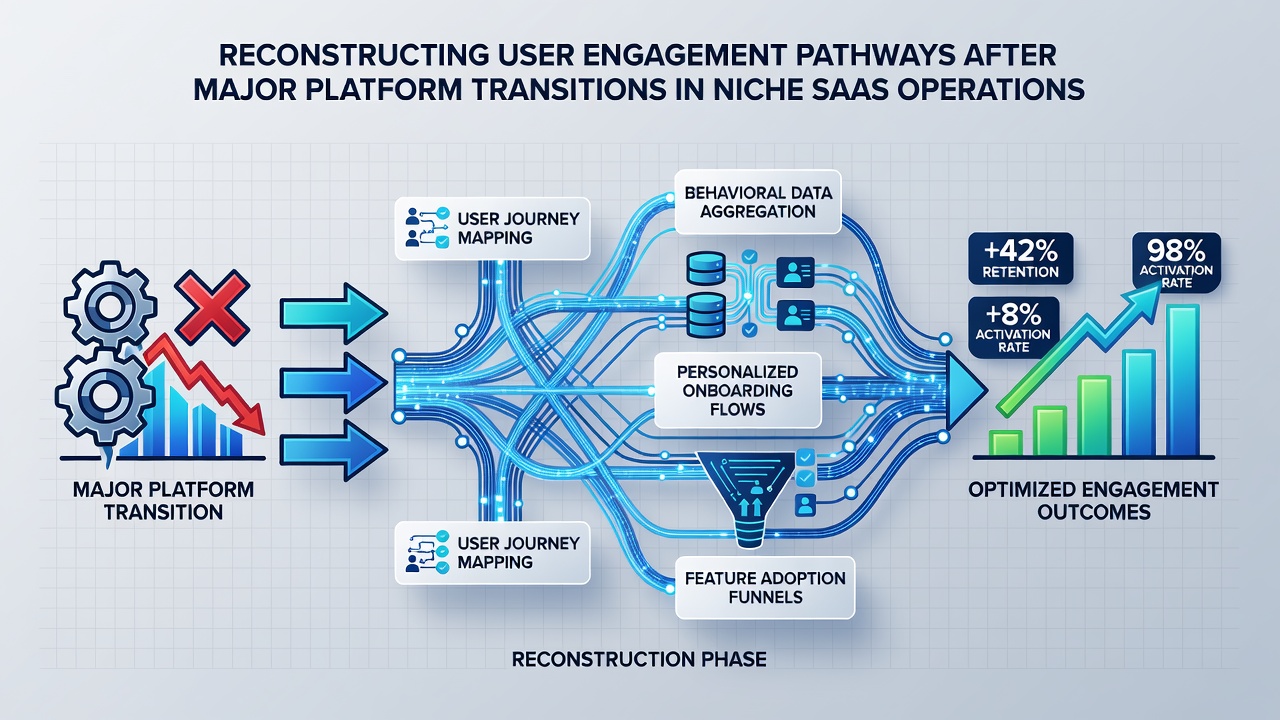
Accurate reconstruction starts with detailed mapping of historical engagement data against new system capabilities, allowing teams to identify where friction points emerge. Legacy analytics often capture session durations, feature usage frequencies, and conversion events that must be translated into equivalent metrics within the updated environment. Researchers at several academic institutions have documented cases where misalignment between old and new tracking schemas led to incomplete datasets, making it difficult to restore personalized recommendation engines that previously drove repeat visits.
One documented example involved a compliance tracking tool for financial advisors that migrated its entire API layer; post-transition logs showed that 42 percent of users abandoned automated report generation because the new interface required additional authentication layers not present in the prior version. Teams addressed this gap by deploying segmented email sequences that guided specific user cohorts through revised workflows while preserving core functionality access.
Implementation Tactics for Pathway Restoration
Rebuilding occurs through phased rollouts that combine A/B testing of navigation elements, progressive feature releases, and real-time feedback collection mechanisms. Companies integrate heat-mapping software with customer support ticketing systems to surface friction in the revised pathways, then iterate on button placements, tooltip content, and default settings. Eurostat data on enterprise software usage indicates that organizations employing at least three iterative testing cycles during reconstruction achieved 18 percent higher average session lengths compared with single-phase deployments.
Communication plays a central role because users need advance notice of interface modifications along with contextual explanations of benefits. Segmented in-app messages and knowledge-base updates help maintain continuity, while dedicated migration specialists provide one-on-one walkthroughs for high-value accounts. Those who studied similar transitions report that proactive outreach reduces support ticket volume by up to 35 percent in the immediate post-launch period.
Measuring Recovery Through Quantitative Indicators
Success metrics focus on time-to-value, feature adoption velocity, and net promoter score movements rather than raw login counts alone. Platforms that restore pre-transition engagement levels within 90 days typically demonstrate sustained revenue stability, according to aggregated figures from multiple vertical SaaS cohorts. Canadian digital economy reports highlight that firms tracking cohort-specific retention curves post-migration identify at-risk segments earlier and apply targeted interventions such as customized training modules.
Advanced reconstruction efforts incorporate predictive modeling to anticipate future pathway disruptions during subsequent updates. Machine learning algorithms trained on historical transition datasets forecast where engagement drops are likely to concentrate, enabling preemptive adjustments before full rollout. This approach has become standard practice among vendors handling sensitive data environments where compliance requirements evolve rapidly.
Conclusion
Reconstruction of user engagement pathways following major platform transitions demands systematic data translation, iterative testing, and continuous measurement across niche SaaS operations. Evidence from regulatory and statistical sources across regions confirms that structured approaches yield measurable recovery in key performance indicators when applied consistently. Organizations that align technical migrations with behavioral analytics maintain operational continuity while adapting to evolving platform requirements.