
Viktor Hughes · 10 October 2026
How Regulatory Shifts Reshape Data Sharing Protocols in Modular Design Software Ecosystems
Modular design software ecosystems have grown into complex networks where components from multiple vendors exchange data on user projects, material specifications, and performance metrics, and regulatory changes now force these systems to adopt stricter controls on how information moves between modules and external parties. In October 2026 new compliance deadlines under several international frameworks require software providers to implement enhanced encryption and consent mechanisms before any cross-module data transfer occurs.
Evolving Regulatory Landscape
Authorities across different regions have updated data protection rules that directly affect software handling design files and shared project data, with the European Commission issuing updated guidance on cross-border transfers that aligns with the Digital Services Act requirements. Observers note that these updates build on existing standards yet introduce mandatory audit trails for every data exchange event within modular platforms. Researchers at institutions monitoring global policy trends report that similar measures appear in frameworks from the Australian Competition and Consumer Commission, which emphasizes transparency in automated decision-making processes used by design tools.
Canadian regulators through the Office of the Privacy Commissioner have also released directives requiring explicit user consent before modular components access shared datasets, and these rules apply even when data remains within a single vendor's cloud environment. The combined effect creates a patchwork that software developers must navigate when updating their protocol stacks.
Technical Adjustments in Data Protocols
Software teams respond by rewriting application programming interfaces to include granular permission layers that segment data based on regulatory jurisdiction rather than project phase, which means a single design module may now route requests through multiple verification checkpoints before releasing structural calculations or cost estimates. Data shows that these layered checks reduce unauthorized access incidents while increasing latency in collaborative sessions, yet engineers continue to refine caching strategies that comply without sacrificing real-time updates.
Encryption and Consent Mechanisms
Encryption standards have shifted toward quantum-resistant algorithms in anticipation of future mandates, and modular ecosystems integrate these at the protocol level so that every transmitted packet carries metadata confirming consent status. Studies from academic sources indicate that platforms adopting such measures early experience fewer integration issues when new rules take effect, because the underlying architecture already supports dynamic key rotation and revocation lists.
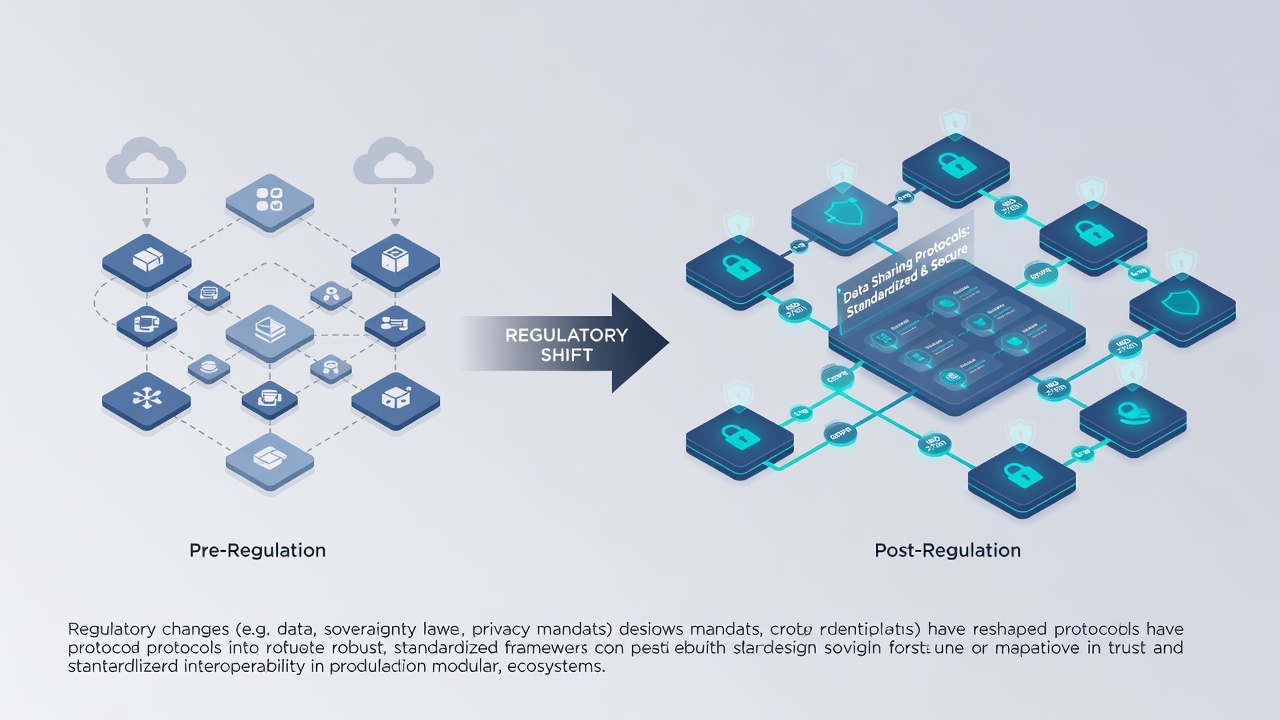
Consent management now extends beyond initial user sign-up to cover ongoing module interactions, which requires new logging systems that record when and why each piece of design information gets shared with another component or third-party analytics service. Those who've studied implementation patterns find that companies embedding these logs directly into the core protocol achieve better audit outcomes during regulatory reviews.
Industry Adaptation Patterns
Companies operating in the modular design space have formed working groups to standardize protocol extensions that satisfy multiple jurisdictions simultaneously, and one collaborative project revealed that unified metadata schemas allow modules to declare compliance status without exposing proprietary algorithms. Figures from industry reports highlight a measurable uptick in adoption of federated learning techniques that keep raw data localized while still enabling aggregate insights across ecosystems.
Yet the transition creates friction for smaller vendors whose legacy modules lack the processing power for on-device consent verification, prompting larger platforms to offer middleware bridges that handle regulatory checks on behalf of connected tools. This arrangement preserves ecosystem connectivity while shifting compliance responsibility toward the central orchestrator.
Future Protocol Developments
Looking ahead, protocol specifications continue to evolve in response to emerging rules around artificial intelligence training data, and modular design tools that incorporate generative features must now isolate training datasets from live project exchanges. Research indicates that separating these streams prevents accidental leakage of sensitive client information into model updates, and several providers have already published open specifications for such isolation techniques.
Global coordination efforts, including contributions from bodies like the Asia-Pacific Economic Cooperation privacy subgroup, aim to reduce duplication in compliance testing, which could streamline updates for multinational software providers. Those monitoring these developments observe that successful protocols balance security requirements with the flexibility needed for rapid module innovation.
Conclusion
Regulatory shifts continue to drive fundamental changes in how modular design software ecosystems manage data sharing, with protocol updates emphasizing encryption, consent logging, and jurisdiction-aware routing as standard practice. As October 2026 deadlines pass and additional frameworks come online, the systems that thrive will be those that embed compliance directly into their core exchange mechanisms rather than treating it as an afterthought layer.